

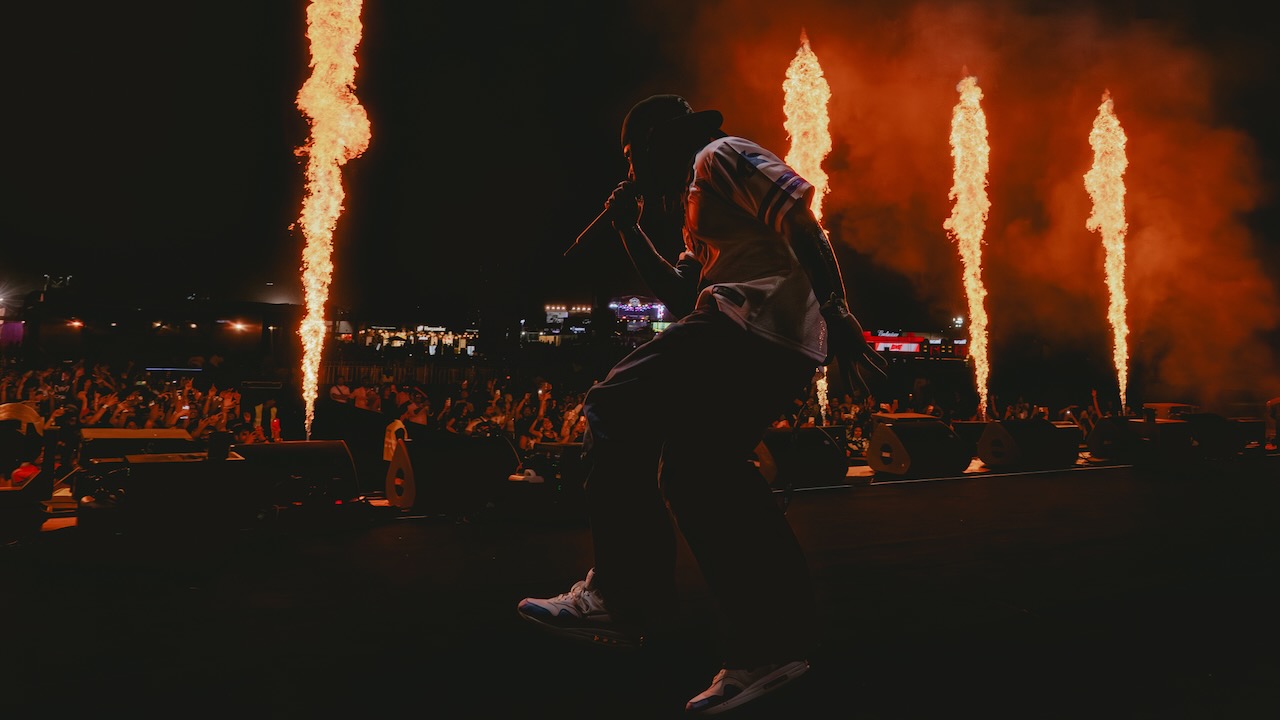
Rolling Loud’s first edition in India carried more weight than a standard festival announcement. Since the brand’s launch in Miami in 2015, Rolling Loud has become synonymous with global hip-hop culture: an institution that exports not just the biggest names in underground and mainstream rap, but the genre’s aesthetics, energy, and evolving identity. Bringing that ecosystem to India signaled the country is no longer adjacent to the global hip-hop conversation; it’s firmly part of it.
The festival arrived at a moment when desi hip-hop (DHH) is experiencing national and international growth. Punjabi music has charted worldwide, multilingual rap has found a large domestic and international audience, and independent artists are receiving label-backed investments and global collaborations. What was once a movement confined to niche circles now includes stadium tours, streaming dominance, and cultural recognition.
Against that backdrop, Rolling Loud India in Mumbai on November 22nd and 23rd felt like more than an event, and the lineup made that clear, featuring Karan Aujla, Divine, Hanumankind, Wiz Khalifa, Don Toliver, Central Cee, Swae Lee, Denzel Curry, Westside Gunn, and regional artists spanning multiple languages. It was bill that genuinely felt historic for the DHH scene.
The Year of Firsts
For a debut edition, Rolling Loud India delivered a string of firsts: several artists played their inaugural Rolling Loud sets, while international stars like Don Toliver, Central Cee, Westside Gunn, and Denzel Curry performed in India for the first time. Karan Aujla became the festival’s first headliner from the host country, and fans even heard unreleased music across both days.
Most importantly, this was the first time thousands of Indian fans got to experience Rolling Loud at all — and the excitement around that alone was massive.
 100vw, 1024px”/></p>
<p id=) ROBB BANK$, photo via Fleck Media / Rolling Loud India
ROBB BANK$, photo via Fleck Media / Rolling Loud India
The Spirit of Hip-Hop
The festival leaned heavily into the culture. Loud Park brought together skaters, dancers, rappers, and hoopers in a way that made it feel like Rolling Loud wasn’t just imported — it was adapted to the city. Cyphers broke out anywhere there was space. Mumbai’s humidity was brutal, but the energy from artists and fans didn’t dip.
There was also a real sense of camaraderie on stage. Artists hopped on each other’s sets, added unrehearsed moments, and let the crowd in on their chemistry. Even smaller artists received big reactions. When Wild Wild Woman’s time got cut, the crowd demanded more. When Shreyas Sagvekar faced a technical issue, the audience backed him until it got fixed. And when the bigger names arrived, the volume genuinely hit stadium levels. The hype held from the first set to the last.
Drip on Point
Hip-hop is an entire lifestyle, and Mumbai clearly understood the assignment. Everywhere you looked were iced-out chains, top-tier sneakers, and fits that made it obvious India isn’t just listening to hip-hop — it’s living it.
Artists stood out too: Robb Bank$ pulled up in a white kurta, Central Cee rocked a Lord Shiva T-shirt paying respect to India, and Arivu showed up in an all-white suit looking like a Tamil mob boss straight out of a movie.
The merch game was strong as well. Rolling Loud leaned into Indian motifs: cricket-inspired designs, festival-specific drops, and even artist merch that fans were more than happy to flock to. It felt like a proper cultural mash-up.
Mumbai Knows How to Mosh
One thing Mumbai absolutely did not miss? The mosh pits.
Even at sets where you wouldn’t expect one, the crowd found a way to open up a pit. Two people vibing would turn into twenty. Robb Bank$’s set received unexpected mosh energy, and Don Toliver’s performance was basically one big chain reaction of pits back-to-back.
Every artist, big or small, witnessed the kind of crowd energy performers dream of.